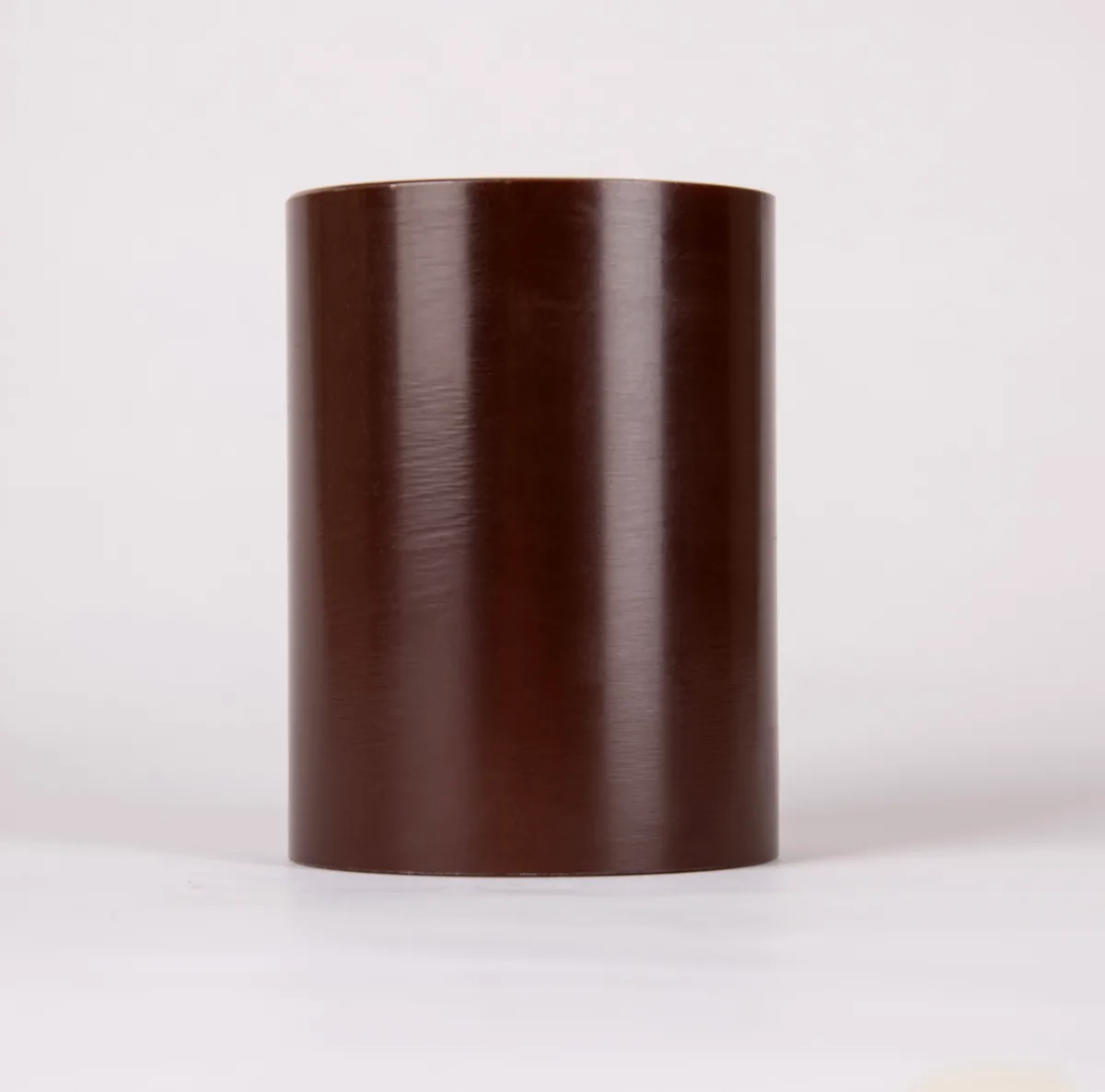
Uneven coating
Epoxy coating is thinner on thread crests and thicker in the roots. Make-up creates local overloads and chipping.
Patent RU 197 702 U1
Modified connection protecting tubing thread joints in corrosive well environments
Field-proven solution for workover stock and challenging wells
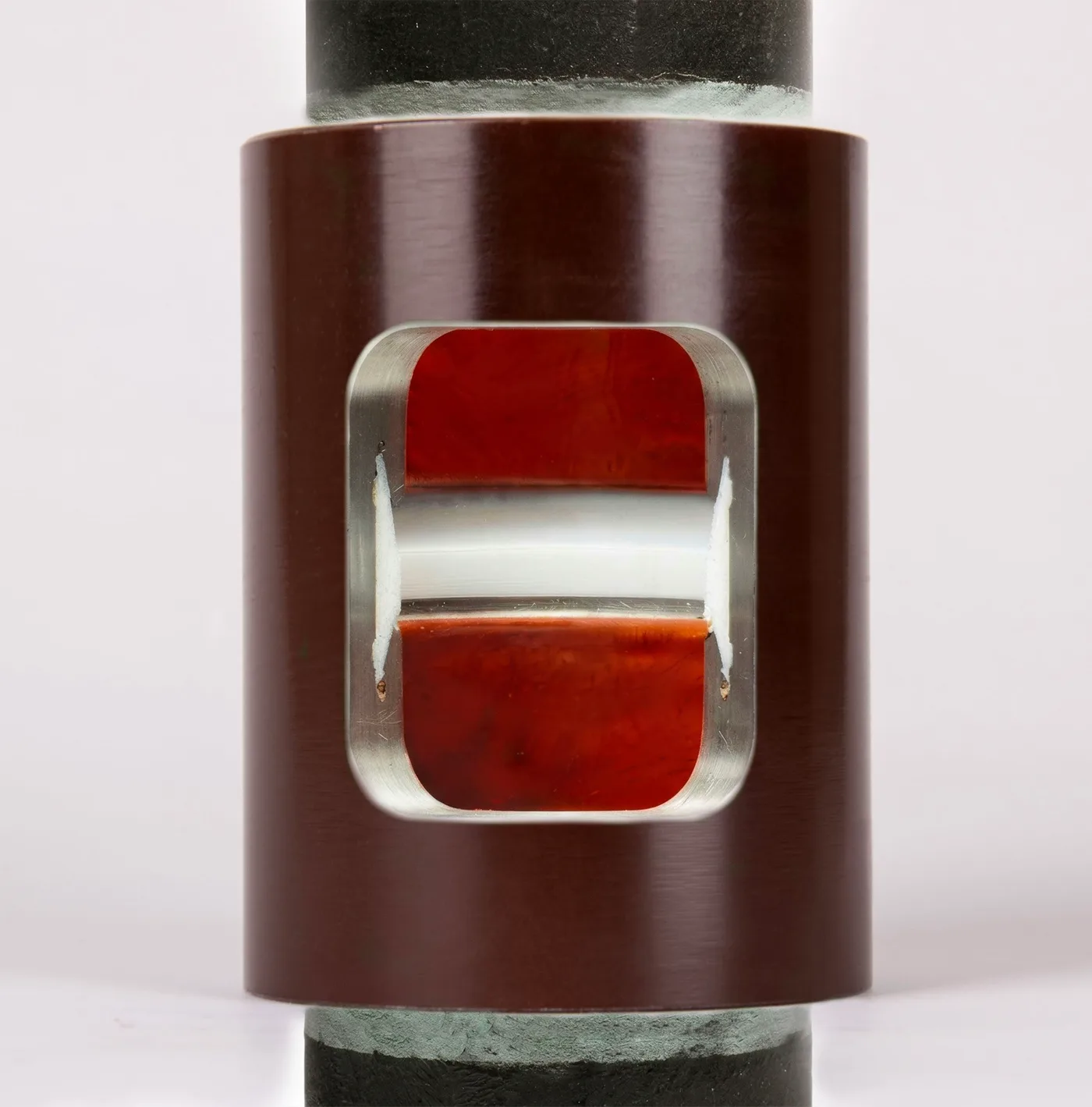
It is inside the coupling that internal coating breaks off, while the gap at the pipe ends becomes a hotspot of corrosion and failure. Conventional solutions address the problem only partially:
Epoxy coating is thinner on thread crests and thicker in the roots. Make-up creates local overloads and chipping.
Thread stresses are uneven. Micro-cracks appear and let the corrosive fluid in.
After 3–6 make-and-break cycles the coating breaks down. Bare steel becomes a site of intense corrosion.
The most vulnerable spot is the pipe end. The coating chips and peels, leaving the metal exposed.
Ordinary seal rings are extruded by pressure during make-up and do not perform under load.
There is no mechanism to control make-up depth and prevent over-torque.
M2® is a modification of a standard API / GOST coupling: a barrier polymer ring with tapered edges is installed in its middle section. During make-up the first thread turns cut into the polymer — the connection is sealed and the vulnerable J-area is fully covered.
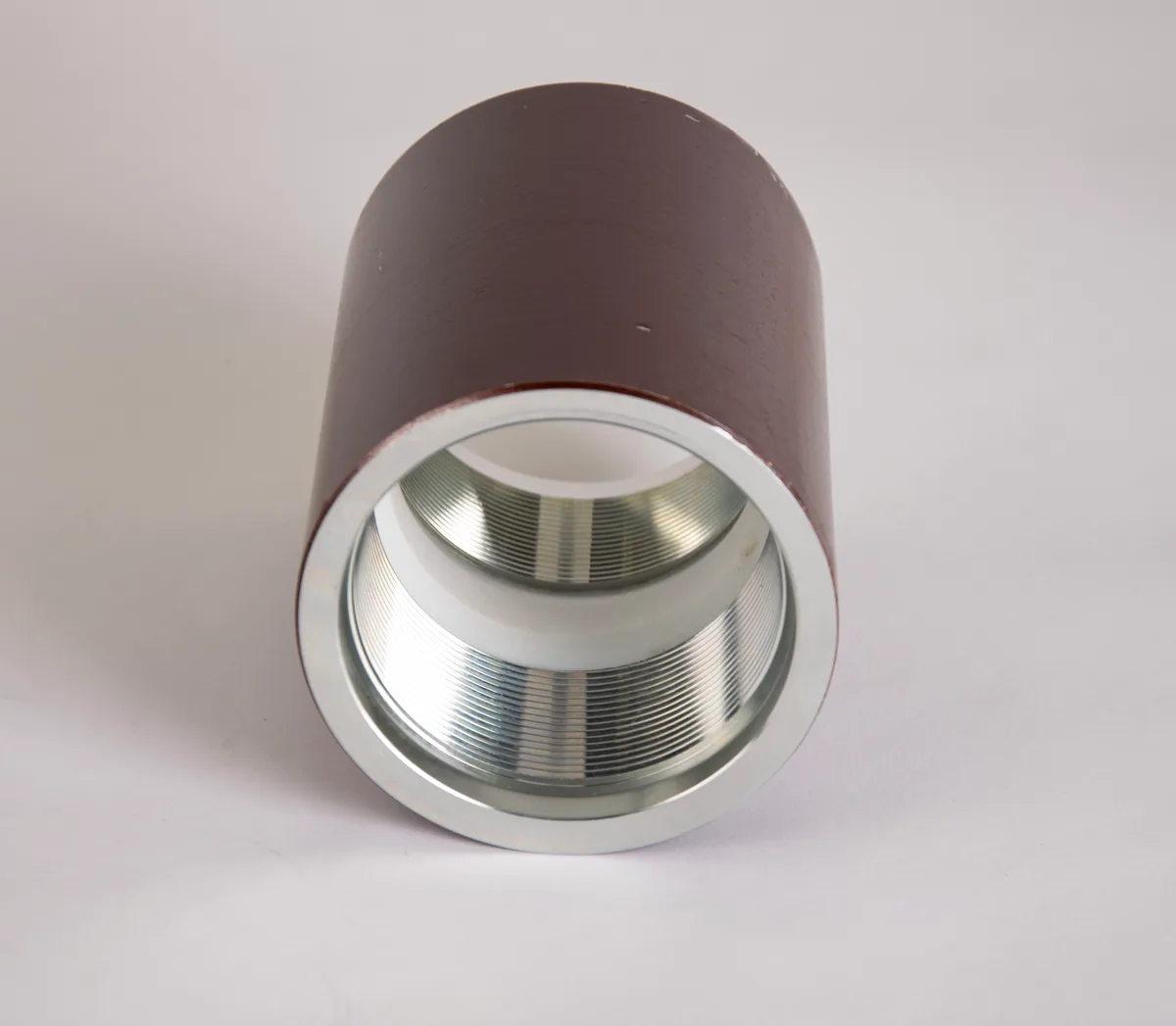
The special ring geometry compensates for thread tolerances — deviations within GOST and API limits.
Physically covers the pipe end where mill coating typically breaks off. Creates a reliable barrier.
The ring deforms within 15–18 % — inside the polymer elasticity range. It fills every micro-gap in the thread.
Smooths out the gaps that appear under string tension and cyclic loads.
8–10+ cycles guaranteed with no loss of seal integrity. Ideal for workover stock.
Once optimal deformation is reached, the ring builds up resistance — helping avoid over-torque.
The asymmetric ring shape distributes load evenly even with thread deviations within GOST and API limits.
During make-up the polymer plastically fills every micro-gap in the thread, creating a labyrinth seal.
The ring fully covers the pipe end, protecting the most vulnerable spot of the connection from corrosion.
Deformation is limited to 15–18 % — the ring acts as an elastic damper, not a rigid stop.
Under string tension and vibration the polymer compensates micro-movements, preserving the seal.
As the ring deforms, make-up becomes noticeably harder — a natural indicator of correct torque.
| Seal material | PTFE / PE-UHMW / PEEK (selected for the well fluid) |
|---|---|
| Make-and-break cycles | 8–10+ with no loss of seal integrity |
| Operating temperature | −40 °C to +150 °C (short-term up to +180 °C) |
| Maximum pressure | up to 10,000–15,000 psi |
| Compatible tubing sizes | 2⅜", 2⅞", 3½", 4½" (API 5CT) |
| Thread type | API 8rd EUE / BTC and analogues, 8–10-turn GOST threads |
| Controlled ring deformation | 15–18 % (within polymer elasticity) |
| J-area protection | Full coverage of the pipe end |
| Applicability | External-upset tubing, including internally coated and lined pipe |
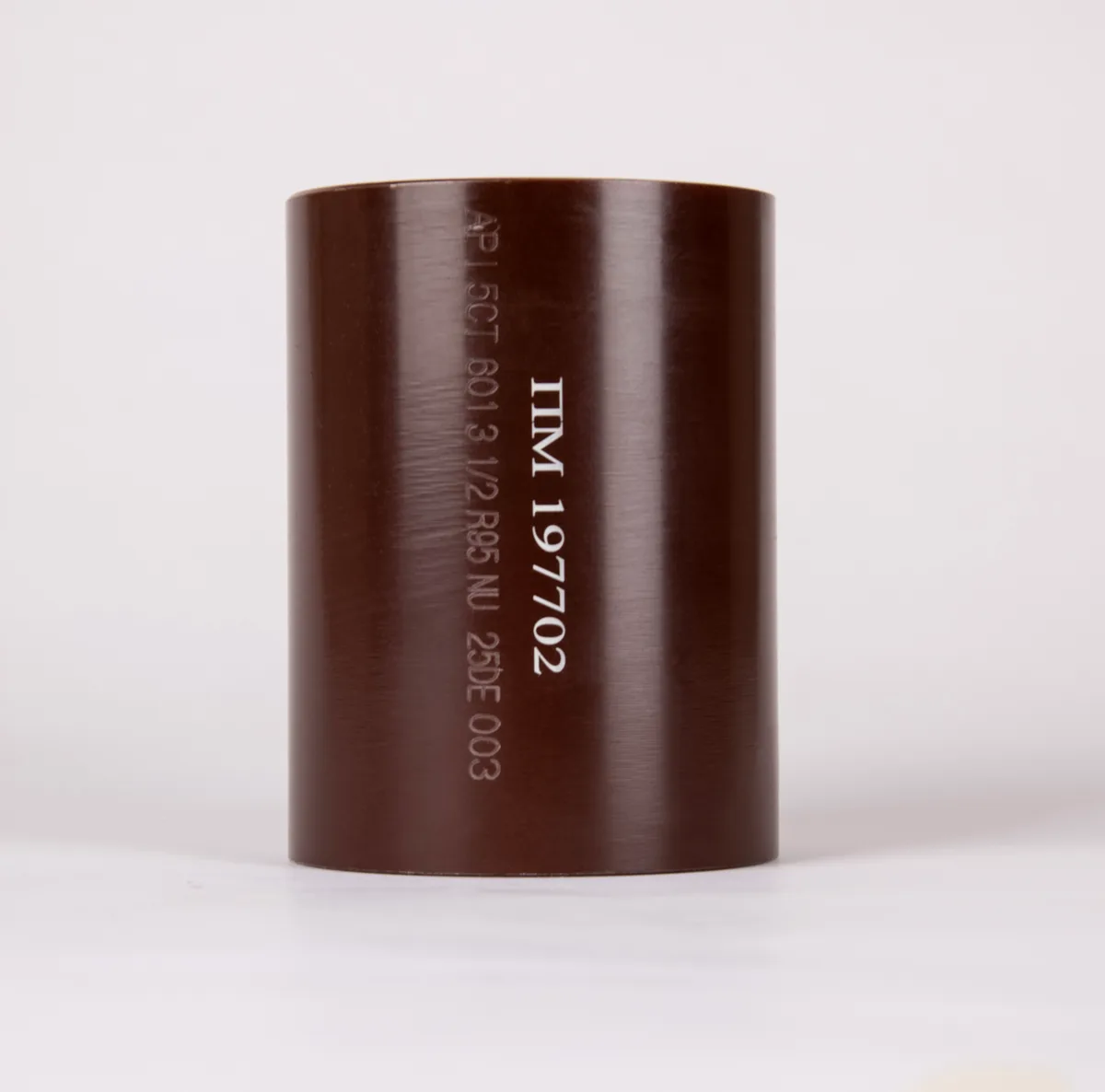
Significantly more than standard coated couplings. More well interventions without replacing the tubing string — ideal for workover operations.
Physical coverage of the connection’s most vulnerable spot. Corrosion does not start at the pipe end.
Asymmetric geometry and polymer plasticity level out API and GOST thread imperfections.
Damps vibration and cyclic loads. Reduces the risk of thread fatigue failure.
No changes to processes, equipment or crew skills. Runs like a regular coupling.
Fewer tubing replacements, fewer emergency workovers, longer run life. Effective with CO₂, H₂S and high salinity.
| Parameter | Standard coupling | M2® coupling |
|---|---|---|
| Repeated make-and-break | 3–6 cycles | 8–10+ cycles |
| J-area protection | Poor — coating chips and fails | Full — the ring covers the pipe end |
| Thread tolerance compensation | Low | High — asymmetric ring |
| Gap filling under load | None | Effective — damping action |
| Make-up torque control | None | Natural torque feedback |
| Corrosive environments | Limited | High resistance |
The seal ring material is selected for the transported fluid, temperature and pressure of the specific well.
Ultra-high-molecular-weight polyethylene
An engineering thermoplastic for extreme service. Self-lubricating material with extremely low moisture absorption.
Polytetrafluoroethylene
A fluoropolymer with outstanding chemical resistance, including oxidizing acids. The primary material of the M2® connection.
Polyetheretherketone
Protection technology for gas wells: the PEEK ring prevents PTFE ring movement at high temperatures and during rapid gas bleed-off.
More operations without replacing the tubing string — 8–10+ make-and-break cycles.
High water cut, CO₂ and H₂S presence. Effective protection in corrosive environments.
Frequent workovers and re-makes. Substantially lower pipe replacement costs.
Corrosion protection when injecting produced water, CO₂ and aggressive agents.
For operators unwilling to pay premium-connection prices yet wanting more than a standard coating.
Where minimizing tubing replacements and unplanned workovers is critical.
M2® performance is proven by operation on real assets in corrosive environments.
Mishovdag field, Azerbaijan
delivery — October 2019
PE-UHMW seal ring. Positive results on producing assets; performance in corrosive environments confirmed.
Bibi-Heybat field, Azerbaijan
delivery — February 2017
PTFE seal ring for service under extreme chemical exposure.
Pilot field trials
ongoing
Pilot field trials are underway. First results confirm the efficiency of the connection.
Tell us about your operating conditions — we will select the ring material and prepare a presentation and a technical-commercial proposal.